How are Car Tires Made?
Agota Szabo - August 8, 2018
Whether we think about it or not, tires are everywhere. As the part of your vehicle that touches the road, they are a major factor in getting you from here to there. They’re a part of your commute to work or trip to the store and can affect your safety on the road. We see them every day and everywhere. But when do we ever really think about them? What actually goes into a tire? It seems like every tire company boasts some sort of trait to improve traction, handling, performance, etc. but does that really change how it’s made? How is it made? You’ve probably never thought about it before, but understanding the process can actually help you understand how all these tire traits work. It’s also pretty interesting, and you get the added benefit of impressing your friends and family with your knowledge the next time they need tires!
Obviously, each manufacturer is going to have a slightly different process, but the basics are usually the same. Before we get into it here, you can check out this video from How It’s Made to see how it all works.
Table of Contents:
Step One: Materials
The first step in manufacturing a tire is all about the materials. (Obviously, you can’t make a tire out of nothing!) You might be thinking, What’s the big deal? It’s just a giant hunk of rubber. But it’s actually not that simple! First of all, there’s natural and synthetic rubbers, and tires can be made with either. Then that rubber is mixed with various oils and additives to help it vulcanize and also enhance certain properties they want in the finished tire. The exact mixture is going to depend a lot on the manufacturer and the tire’s intended use. For example, performance tires will have a different composition than all season tires, and winter tires will be different from summer tires. It can also vary by what part of the tire it’s going to go into, so the lining could be a different compound from the tread. Either way, all the components are mixed together until they’re kind of like gum.
Step Two: Components
Each component of the tire can have different properties so they are all made separately on machines dedicated for that purpose. Once the rubber is mixed, kneaded and flattened out, they’ll send it to the appropriate machine to be turned into one part of the tire. This is the step where they’ll also add any other components that are necessary for that part of the tire, like the plies or the bead. The plies are usually made with cords of either metal or fabric (like Kevlar or polyester) woven together to form a sheet. This sheet is then sent through a machine that coats both sides with a thin layer of rubber, and that’s what makes a finished ply. The bead is made by a machine that bundles the wires or bands together and then coats them with rubber. This is then formed into an appropriately sized ring and you have a bead. The sidewalls are cut from thinner strips of rubber, and the part that will become the tread is kneaded, pressed, sometimes marked with a color code, and then cut to length. Once the parts are made on their respective machines, they’re sent off for the next step in the process...
Step Three: Assembly
After all the parts are made, they’re sent to the tire building machine. This basically consists of a drum that can expand and contract and which the tire is built around. First an airtight piece of rubber is usually put down to form the inner liner of the tire. On top of that, they usually lay the casing ply. Then they’ll put the beads on either side and bladders will inflate on the machine, causing the edges of the casing to fold up and over the bead. Usually the sidewalls are attached next and folded down with rollers. Now they have the inner layer, or skeleton of the tire. The outer layer of the tire is usually assembled on a separate machine, combining the plies, cords, and tread. The inner and outer parts are then brought together, and the machine inflates the inner part so that they stick together. They don’t need any adhesive for any of this, because the rubber naturally sticks together. Once the edges of the tread rubber are folded down over the sidewalls, you’ll have something that’s recognizable as a tire, but with no tread pattern. This uncured blank is called a “green” tire.
Step Four: Vulcanization
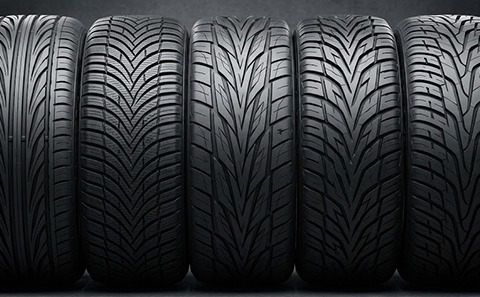
This is the step where the tire gets its tread! The green tire is taken to a mold which will press it into shape and imprint the tread pattern on the blank outer layer. Once it’s inside the mold and inflated to fit, they heat up the mold. Usually they’ll use water or steam filled bladders. This heating is what causes all the layers of the tire to fuse together. It also causes vulcanization, which basically means the rubber goes from soft and sticky to strong but pliable. The time it stays in the mold can vary, but it’s usually about 15 minutes. This makes sure the parts have time to fuse and take the shape of the mold and that the chemical reaction has time to set the whole tire.
Step Five: Inspection
After it comes out of the mold, it’s time for a few finishing procedures (like trimming off any excess rubber) and then it’s off for inspection. They check each tire to make sure it’s uniform and there are no defects or faults in the rubber. This quality inspection is the final and most important step before the tires are shipped off to be sold. It’s what makes sure the quality of their products remains up to their standards, as well as yours.
Now you know what goes into making your tires! If you want a little more detailed view than the video above, you can check out this video by Michelin. And next time you’re buying tires, you’ll have a better idea of how the different features work!
Related Posts