Tire Mounting And Balancing: Difference, Processes, And Cost
Tina Alijevic - December 31, 2025
Table of Contents:
What Is Tire Mounting?
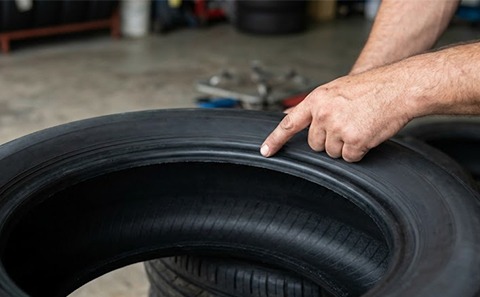
Tire mounting is a professional process of fitting a new tire onto a wheel rim and then installing that wheel assembly onto a vehicle's axle. Tire mounting is typically performed by professional installers to ensure precision, but it can be done manually using tire irons or levers; however, this method is labor-intensive and requires skill to avoid damaging the tire or trim. Most professional shops use tire mounting machines that employ mechanical arms and rollers to push the tire beads over the rim with much less effort and greater consistency. Properly mounted tires are essential for performance, safety, handling, and longevity, while incorrectly mounted tires can lead to air leaks, vibration, uneven wear, or even dangerous blowouts while driving.

Tire Mounting Process Explained
The tire mounting process involves two main phases: removing the old tire from the wheel and installing the new one. The first step is to remove the old tire. Separating the tire beads from the rim's bead seats, where they've been sealed. This is accomplished by using a bead breaker, either manual or machine-powered, which applies force to push the sidewall inward and pop the bead loose from the rim. Once both beads are broken, the tire is positioned on a mounting machine, and the beads are pried over the rim flanges one at a time until the tire is completely removed from the wheel.
Before mounting a new tire, both the tire beads and rim are cleaned and inspected for damage. Then, a tire mounting lubricant is applied to both beads and the rim edges to reduce friction during installation. After that, the tire is positioned onto the wheel with the lower bead pushed over the rim and into the drop center. During mounting, the tire installer aligns the tire's balance marks, the red and yellow dots on the sidewall. These specific dots and specific points on the wheel work together to minimize vibration and ensure the tire's ideal balance. The upper bead is then worked over the opposite rim flange using the mounting machine's arm to tire irons, with the final section requiring the most effort as the tire stretches to its limit.
Once both beads are over the rim, the tire is inflated. As air pressure builds, you'll typically hear two distinct pops as each bead snaps into its proper seat against the rim. The tire is then inflated to the recommended pressure, checked for proper seating, and balanced before being installed on the vehicle.
Protecting The Rims: Why Lube And Paste Matters
Tire mounting lubricant, commonly called tire lube, mounting paste, or bead lube, is one of the most critical yet often overlooked components of proper tire installation. Using the right lubricant isn't just about making the job easier. It's essential for protecting both your expensive wheels and tires from damage during the mounting process.
The lube and paste are crucial in the mounting process for reducing friction and allowing smooth tire bead seating without damage, ensuring an airtight seal, preventing rim corrosion, and making feature removal easier. They also protect the rims by acting as a barrier against rust and allowing the tire bead to grip properly without sticking or slipping. Using adequate lubricants also prevents issues from homemade substitutes like dish soap or petroleum, which can harm rubber and lead to bead failures.

DIY vs PRO: Do You Need Special Tools?
Yes, DIY tire mounting requires special tools like tire iron spoons, rim protectors, bead breakers, lubricant, and an air compressor to avoid wheel damage and ensure safety, while professional installers use dedicated machines for speed, precision, and balancing. The tire mounting process is possible to do yourself with basic tools, but the risks of scratching rims and damaging tire beads without professional equipment and experience are significant.
While mounting tires with manual tools is technically possible, it's extremely labor-intensive and carries a lot of risk of damaging the tire, rim, or TMPS sensors. Beyond the mounting itself, achieving proper wheel balancing at home without specialized equipment is almost impossible, which can easily lead to safety concerns and cause premature tire wear. For most passenger vehicle owners, professional mounting and balancing is the safer, more reliable choice.
What Is Tire Balancing?
Tire balancing is a process that ensures your tire and wheel assembly has an even weight distribution as it spins, correcting natural imperfections or road damage by adding small metal weights to the rim. It can significantly reduce and prevent vibrations, premature wear, protect suspension parts, and guarantee a smoother and safer driving experience.
Why New Tires Need Balancing?
New tires need balancing because no tire or wheel can be perfectly uniform in weight and roundness. During production, tiny variations occur in rubber density, material distribution, tread thickness, and sidewall construction, which create a “heavy spot” where slightly more mass is concentrated in one area.
At the same time, the wheel also has some imperfections. That's why, when you put a tire on a wheel, you're stacking two imperfect objects, often leading to imbalance. To fix this, tire installers mount the wheel assembly on a balancing machine that spins it to detect where the heavy spots are, then attach small clip-on weights to the rim at specific points to create an equal and opposite force that cancels out the imbalance. Without this balancing process, even small imperfections become noticeable at higher speeds, creating vibrations in the steering wheel and causing uneven tire wear. But by adding some weight to the perfect place, the installer ensures a smooth, vibration-free driving experience.

Road Force Balancing vs Standard Balancing
Road force balancing simulates real-world driving conditions. The machine uses a large roller that presses against the spinning tire with about 1,200-1,400 pounds of force, which is exactly the weight of the vehicle on the road. This machine measures both weight imbalance and physical irregularities in the tire shape. It detects variations in how the tire pushes back against the roller as it rotates, identifying problems that standard balancing can't catch. Then the machine provides recommendations such as suggesting repositioning the tire on the wheel to minimize road force, adding weight in specific locations, or even replacing a tire if the variations exceed acceptable limits.
Standard balancing addresses weight distribution by spinning the tire-wheel assembly on a machine that detects heavy spots and indicates where to add weights. This ensures the mass is evenly distributed around the axis of rotation, eliminating most vibrations caused by imbalance. It's quick, inexpensive, and effective for most tires. Standard balancing solves the problem of uneven weight but does not address other imperfections, like shape irregularities.
Road force balancing is especially valuable for high performance vehicles, luxury cars with sensitive suspensions, or when you're experiencing persistent vibrations that standard balancing didn't resolve. It costs more and takes longer, but it can eliminate vibrations that standard balancing misses entirely.
Tire Balancing vs Wheel Alignment: Which Do I Need?
Many drivers confuse tire balancing and wheel alignment, but they're completely different services that address different problems. Understanding the differences can save you money and keep your car running smoothly. Balancing deals with weight distribution around the tire, while alignment deals with the angle and direction your wheels point. You might need one, both, or neither; they solve different problems and require different equipment and expertise.
If your car pulls to one side when driving on a straight road, you likely need a wheel alignment. Other signs include uneven tire wear, which means that one edge is wearing faster than the other, and a curving steering wheel when driving straight. Wheel alignment should be checked annually, after hitting a major pothole or curb, when installing new tires, or if you notice any pulling or uneven wear.
On the other hand, if you feel vibrations in the steering wheel or vibration seat at a certain speed, hear a thumping noise, or notice your steering wheel shaking, you probably need tire balancing. You should get your tires balanced whenever you install new tires, rotate your tires, or notice vibration issues.
Signs You Need A Re-Balance
Even if your tires were perfectly balanced when installed, they can fall out of balance over time due to normal wear, road conditions, and everyday driving. Recognizing these warning signs early can prevent more expensive problems down the road and keep your vehicle running smoothly.
Vibration At High Speeds
One of the most obvious and common signs is vibration that becomes noticeable at high speeds and gets worse as you accelerate. If you feel your steering wheel start to shake or vibrate on the highway, but the ride smooths out when you slow down, your tires are almost out of balance. This happens because rotational forces amplify as speed increases, which means that a small imbalance that's barely noticeable at 30 mph can become a vigorous shake at 70mph.
Front tire imbalance typically causes steering wheel vibration, while rear tire imbalance creates vibrations you'll feel through the seat or floorboard. Pay attention to when the vibration occurs, if it's speed-related and peaks at highway speeds, balancing is likely the solution. If it's constant at all speeds, you might have a different issue, like a bent rim or damaged tire.
Uneven “Cupped” Tire Wear
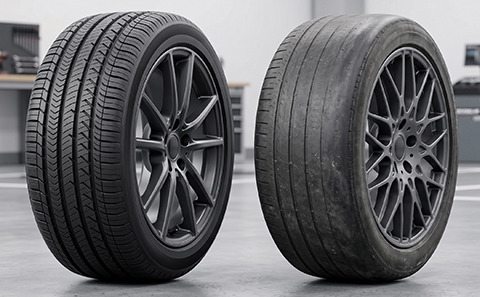
The most distinctive signs of imbalanced tires are cupped wear patterns on the tread. This looks like sips sections around the tire's circumference, resembling an egg carton pattern. Run your hands across your tire's tread. If it feels wavy, with an up-and-down pattern rather than a smooth surface, your tire is cupped. This happens when an out-of-balance tire bounces as the tire rolls, causing the heavier section to hit the road harder with each rotation while the lighter section barely touches.
Over thousands of rotations create rhythmic high and low spots in the tread. Cupped tires often produce a humming, growling, or roaring noise that increases with speed, and once cupping develops, it's permanent. If you catch cupping early, rebalancing can prevent it from worsening, but severe cupping means you'll need new tires.
Straightening The Rim
Sometimes what looks like a balancing problem is actually a bent or damaged wheel rim. If you've hit a pothole, curb, or road debris hard enough, the rim can develop a bend or flat spot that makes proper balancing impossible. When a technician places your wheel on the balancing machine, they can detect if the rim itself is out of round. It will wobble or show excessive runout as it spins.
A bent rim causes persistent vibration that adding balance weights can't fix because the wheel isn't rotating around its true center. In these cases, the rim needs to be straightened or replaced before balancing can be effective. Professional wheel straightening uses specialized hydraulic equipment to carefully reshape the rim back to its original specifications, but this is only possible if the damage isn't too severe. Severely bent, cracked, or structurally compromised rims must be replaced for safety reasons.
The Cost: Mounting And Balancing Prices
Understanding the cost of tire mounting and balancing helps you budget for this essential service and avoid surprises at the shop. Prices vary based on the vehicle type, tire size, and the specific services required, but here's what you can typically expect to pay:
Vehicle Type | Mounting (Per Tire) | Balancing (Per Tire) | Total (Per Tire) | Total (4 Tires) |
Passenger Cars | $15 - $25 | $10 - $20 | $25 - $45 | $100 - $180 |
Truck/SUVs | $20 - $35 | $12 - $25 | $32 - $60 | $128 - $240 |
Sports Cars | $25 - $40 | $15 - $30 | $40 - $70 | $160 - $280 |
Motorcycles | $20 - $30 | $10 - $20 | $30 - $50 | $60 - $100 (2 tires) |
Semi Trucks | $35 - $60 | $20 - $40 | $55 - $100 | $990 - $1800 (18 tires) |
Several factors influence the cost of tire mounting and balancing. Tire size is a major consideration, as larger tires and sports cars require more labor and specialized equipment, which leads to a higher cost. Low-profile tires are more delicate and time-consuming to mount without damaging the tire or rim. Drivers can expect to pay between $15 and $30 per tire for mounting and balancing service.
At the same time, run flat tires and tires with TPMS also add to the cost due to the extra care and equipment required. The investment in proper mounting and balancing is relatively small compared to the cost of the tires themselves, and doing it right ensures you get maximum life and performance from your new tires.
Conclusion
Tire mounting and balancing are crucial services that guarantee even weight distribution for a smooth ride, a safe driving experience, vibration-free performance, prevent premature wear formation, and damage to suspension parts. Tire balancing can extend tire life, increase its fuel efficiency by reducing rolling resistance, and is essential for overall vehicle performance, making it a vital part of proper maintenance.
Proper mounting secures the tire to the rim, while balancing adds small weights to correct weight distribution, ensuring the wheel spins perfectly. Skipping this process can easily lead to a compromised driving experience, increased repair costs, and potential safety hazards, making it a small investment for significant long-term benefits.
Frequently Asked Questions
Is Tire Balancing Necessary?
Yes, tire balancing is necessary. It is recommended to have this service performed every 5,000 to 6,000 miles, or with every tire rotation, to ensure a smooth ride, prevent uneven treadwear, and protect suspension parts. Even new tires can easily become unbalanced over time due to normal wear impacts.
Does Tire Rotation Include Balancing?
No, tire rotation and balancing are two separate services, but they can be performed together since both involve removing the wheels. Tire rotation moves tires to different positions, while balancing adds small weights to the wheel assembly to ensure uniform weight distribution and prevent vibration.
What Is The Traction Point Of A Tire When Mounting?
The traction point of a tire during mounting is the spot where the tire bead contacts the rim flange. It is crucial to seat the tire properly to avoid damaging the TMPS sensors. It is the point before or opposite to the tire seat, allowing the bead to drop freely and preventing the sensor from being crushed against the wheel.
How Long Does Tire Mounting Take?
The tire mounting process and balancing for four tires can typically take 45 minutes to 1.5 hours. It depends on factors like the vehicle, tire size, whether you need an alignment, the shop's business, or the mechanic's experience. A single tire mounting can take 10 to 15 minutes.
Related Posts