Car Stuck in Snow? What to Do and How to Get Out Safely
Dajana Novak - October 14, 2026
If you've ever found your car stuck in snow, you know how quickly a routine drive can turn into a standstill. Maybe you turned onto an unplowed side street, pulled into a driveway after an overnight storm, or cut across a parking lot where the snow had piled up. Perhaps you slid gently into a snowbank on a slick curve, or a deep drift swallowed your front tires before you saw it coming. However it happens, the wheels spin, the car goes nowhere, and it always seems to happen at the worst possible time.
The good news is that all you really need are a few simple techniques and a little patience. The most important rule is to put safety first, since a rushed attempt can cause bigger problems than a late arrival. To avoid trouble before it starts, take a look at our tips on driving safely in snow.
Table of Contents:
First Steps: Stay Safe Before You Try to Get Out
The first few minutes after you get stuck matter more than most drivers realize. Before you touch the gas again, take a breath and slow everything down. Spinning the wheels harder will only dig the tires deeper into the snow, and a panicked reaction can turn into a tow-truck call.

Make yourself visible. Switch on your hazard lights right away, especially if you are close to traffic or on a road with limited visibility. Other drivers may not see a stopped car until the last moment, and falling snow makes that even more likely.
Check the tailpipe. Snow can easily pile up behind the car and block the exhaust pipe. If the engine is running while the tailpipe is blocked, carbon monoxide can seep back into the cabin, and you won't be able to see or smell it. Clear the snow away from the pipe before you idle the engine for heat, and check it again from time to time if you stay put for a while.
Size up the situation. Look at how deep the snow is around each tire, and whether it is packed against the underside of the car. Check whether the vehicle is high-centered, meaning the chassis is resting on compacted snow with the tires barely touching the ground. Before you open the door, make sure it is safe to step outside. Watch for passing traffic, ice, and any hazards hidden under the snow.
Know when to stay put. In a severe storm or a remote area, staying with your vehicle is usually safer than setting out on foot. A car offers shelter from the wind and is much easier for rescuers to spot than a person walking through whiteout conditions.
How to Get Your Car Unstuck From Snow: Step-by-Step
Once the car is safe and you've assessed the situation, it's time to get moving. Work through these steps in order, and stop if the car breaks free.
Step 1: Straighten the Front Wheels
Point the front wheels straight ahead before you try anything else. Wheels turned to one side have to plow through snow instead of rolling over it, which takes far more force and makes them more likely to dig in. A straight path gives the tires the easiest possible exit.
Step 2: Clear Snow Around the Tires and Under the Car
Clear the snow in front of and behind each drive wheel, creating a short runaway the tires can roll onto. If the car is resting on packed snow, dig out the area underneath it as well so the chassis is no longer holding the vehicle in place. A shovel works best, but an ice scraper or even a gloved hand can do the job when nothing else is available.
Step 3: Add Traction Under the Drive Wheels
Give the tires something to grip. Sand, kitty litter, gravel, and traction mats all work well, and car floor mats can serve as a last-resort option. Spread the material in front of the drive wheels in the direction you plan to travel, so the tires roll onto it as soon as they start to turn.
Step 4: Accelerate Gently in a Low Gear
Select a low gear, or switch to your vehicle's snow mode if it has one, and ease onto the gas with a light touch. Smooth, steady power helps the tires bite instead of spin. If the wheels keep slipping, try turning off traction control temporarily, since on some vehicles it cuts engine power the moment it senses slip. Switch it back on as soon as you are moving again.
Step 5: Rock the Car Back and Forth
When gentle acceleration is not enough, try rocking the car to build momentum. Shift between drive and reverse, using light throttle each time to nudge the car forward and then back a little farther with every cycle. Always wait until the car comes to a complete stop before changing gears, because shifting while it is still rolling can damage the transmission. If several attempts get you nowhere, stop and move on to the next step rather than risk overheating the drivetrain.
Step 6: Get a Push or a Tow
A helper can make a big difference. Have someone push the vehicle from behind while you accelerate gently. If a push is not enough, another vehicle can pull you out with a proper tow strap. Attach it only to designated recovery points, never to the bumper or suspension parts, which can tear off under strain.

Mistakes to Avoid When Your Car Is Stuck in Snow
A few mistakes can turn a simple fix into an expensive one. Let's cover the most common mistakes:
Revving the engine. Spinning the wheels at high RPM polishes the snow beneath them into slick ice and digs the tires deeper into the rut. It can also overheat the tires, transmission, and differential, so keep the throttle light and steady.
Shifting while the car is still moving. Switching between drive and reverse before the car has fully stopped puts heavy strain on the transmission. Pause completely each time, even when you are in a hurry.
Idling with a blocked exhaust. Running the engine for long stretches while snow clogs the tailpipe lets carbon monoxide creep into the cabin. Clear the pipe first, and recheck it regularly if you are waiting out the storm.
Pouring hot water on the snow or ice. It may seem like a clever shortcut, but the water refreezes within minutes and leaves a slicker surface than before. It can also damage cold glass and tires.
Towing from the wrong spot. Hooking a strap to a bumper, a suspension component, or any other non-rated part can rip it right off the car. Use only designated recovery points, which are usually marked in the owner's manual.
What to Keep in Your Car in Winter
A little preparation goes a long way. Stash these items in your trunk before the first snowfall, and getting unstuck, or staying comfortable while you wait for help, becomes far easier.
For getting unstuck:
- Compact shovel
- Traction mats
- Bag of sand or kitty litter
- Tow strap
- Ice scraper and brush
For staying safe and comfortable:
- Flashlight + extra batteries
- Phone charger or power bank
- Warm blanket
- Gloves
- Water
- Snacks

When to Call for Help
Knowing when to stop trying is just as important as knowing how to start. Pushing past the point where your efforts are working can damage the car or put you at risk, so it's time to make the call if any of these apply:
- The car is high-centered.
- You are in a ditch or on a steep slope.
- Repeated attempts have failed.
- Conditions are dangerous (heavy snowfall, fading light, extreme cold, or fast-moving traffic).
Instead, you should call:
- Roadside assistance; your insurer, auto club, or car manufacturer may include winter recovery in your plan. This is usually the easiest first call.
- A local towing service. If you don't have coverage, a nearby tow operator can usually reach you quickly and has the right gear to pull you out safely.
- Emergency services are a must if anyone is in danger. Call 911 if someone needs medical attention or if the car is blocking traffic.
Can Getting Stuck in Snow Damage Your Car?
Usually, the snow itself does no harm. The damage tends to come from what happens next, when frustration pushes drivers to force their way out.
Prolonged wheel spin makes the transmission and differential work hard with little cooling airflow, and the heat can wear down fluids and internal parts long before a warning light appears. Packed snow and ice are also surprisingly solid, so driving hard into a drift or yanking free of a frozen rut can crack splash shields, scrape exhaust components, or tear a loose bumper cover. Sliding into a curb or a pile of snow can bend a wheel or stress suspension parts, and spinning tires can overheat or pick up cuts and sidewall bulges from hidden rocks and ice.
Once you are free, look over each tire, check the pressure, and pay attention to the steering. If the car pulls to one side or the wheel feels off, have it inspected. Patience is the best protection here, since slow, gentle effort costs nothing and a forced escape can lead to a repair bill.
How to Avoid Getting Your Car Stuck in Snow
The best way to stay out of trouble is to start with the right tires. Winter tires use softer rubber that stays flexible in the cold, along with deeper tread and thousands of tiny slits that bite into snow and ice. All season tires are a solid option during light winters, but they stiffen as temperatures drop and simply cannot match the grip. A dedicated set, such as the Continental VikingContact 8, gives you better traction for starting, stopping, and steering, which means fewer spinning wheels and fewer calls to a tow truck.

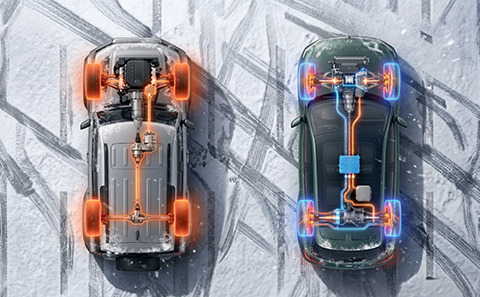
Your drivetrain matters too, but it is not a cure-all. Power going to all four wheels helps a car pull away from a stop, yet it does little to help you brake or turn on slick roads, and it cannot make up for worn or unsuitable tires. An AWD or 4WD vehicle on all season tires can get stuck without proper tires. To see how the two compare, read our guide on AWD or 4WD in snow.
Pair good tires with a few smart habits: keep your speed down, leave extra room to stop, and avoid unplowed side streets when you can. Those small choices go a long way toward keeping you moving all winter.
Final Thoughts
While having a car stuck in snow can be frustrating, it rarely has to become a disaster. Stay calm, clear the tailpipe, and put safety ahead of speed. Then work through the basics: straighten the wheels, dig out the tires, add traction, and use gentle throttle or a careful rocking motion. Avoid the habits that cause real damage, like revving hard or towing from the wrong spot, and know when it is time to call for help.
The best fix is still prevention. A well-stocked winter kit, cautious driving, and a set of tires built for the season will keep you moving through most storms. With a little preparation, the next snowy morning is far more likely to be an inconvenience than an emergency.
Frequently Asked Questions
What to Do if Your Car Is Stuck in Snow?
Stay calm, turn on your hazard lights, and make sure the tailpipe is clear of snow. Then straighten the wheels, dig out around the drive tires, add sand or traction mats, and accelerate gently. If that fails, call for help.
How Do You Move a Car Stuck in Snow?
Clear the snow around the drive wheels, then place sand, kitty litter, or a traction mat in front of them. Use a low gear and light throttle, and gently rock the car between drive and reverse. A push or a tow strap can finish the job.
Why Is My Car Shaking After Being Stuck in Snow?
Shaking often comes from packed snow or ice stuck to the wheels, which throws them off balance, or from a bent wheel or damaged tire after spinning or sliding. Clear any buildup and check the tires. If it persists, have the car inspected.
Related Posts

M+S Tires and Winter Tires - How do They Perform in Snow?
Agota Szabo - December 26, 2022
Is AWD or 4WD Better in Snow? Compare Your Winter Options
Dajana Novak - September 16, 2026
Best Winter (Snow) Tires for 2026/2027: Best Models Compared
Tina Alijevic - October 7, 2026