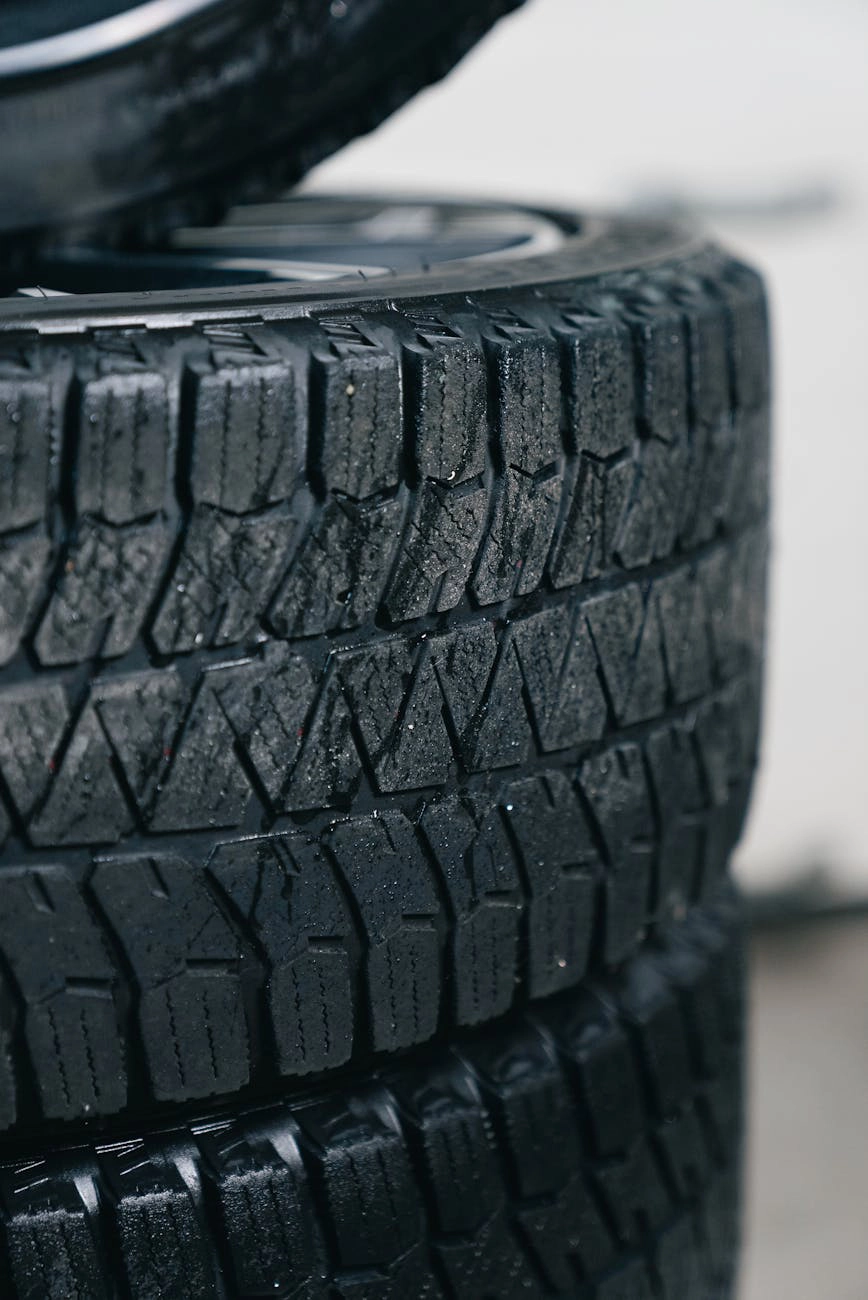
Tire Size Decoder
Each tire displays important specifications on the sidewall, depending on the tire type and intended use. Learn what each number and letter means across P-metric, LT-metric, flotation, and bias-ply formats, and understand how to interpret measurements like width, aspect ratio, load index, and speed rating.
Tire Type Prefixes
P
P stands for "P-metric" or "Passenger Vehicle." It’s designed for cars, minivans, and crossovers. It’s used primarily for daily commuting and highway travel. It prioritizes ride comfort, fuel efficiency, and on-road handling.
LT
LT stands for "Light Truck." Designed for pickups, full-size SUVs, and vehicles used for towing or hauling heavy loads. LT tires feature reinforced construction and higher load capacities than P-rated tires, with load ranges (C, D, E, F) indicating specific weight thresholds. These tires require higher air pressure than P tires.
ST
ST stands for "Special Trailer." Designed exclusively for trailer axles, such as boat or utility trailers, and never for motorized vehicles. Engineered with stiff sidewalls meant for trailing, not turning, to resist swaying and provide stability under towed loads. Using ST tires on a car is a major safety hazard.
C
C stands for "Commercial" and appears as a suffix after tire size, like 195/70R15C. Indicates a commercial light-duty tire for vans, minibuses, delivery vehicles, and work vehicles carrying heavy payloads. Operates at higher pressures than passenger tires with Load Range C or D construction for high load-carrying capacity.
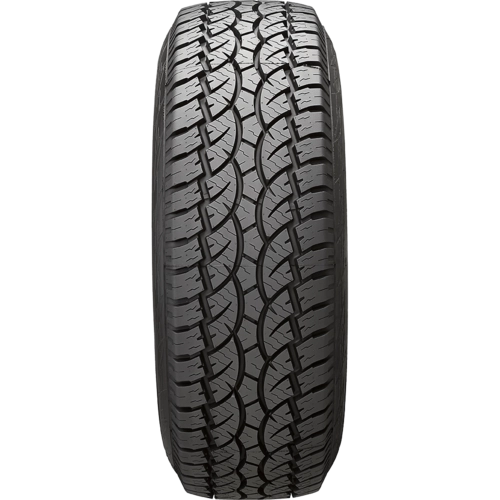
No Prefix
When a tire size has no prefix letter, it’s called a Euro-Metric or Metric tire size. For example: 215/65R16 (no letter before the numbers).
Euro-metric tires follow European standards and are designed similarly to P-metric (passenger) tires, but with some key differences:
- Load capacity: Typically carry slightly higher load ratings than equivalent P-metric sizes.
- Construction: Built to European specifications with different load/pressure tables.
- Usage: Common on European vehicles and some Asian imports.
Interchangeability: Can often replace P-Metric tires, but check load ratings carefully.
Tap each segment to see its meaning.
/
225 - Section Width
This number represents the tire's width in millimeters, measured from sidewall to sidewall when the tire is properly mounted and inflated. A 225mm tire is approximately 8.9 inches wide. Wider tires generally provide more contact with the road for better grip and stability, but they may reduce fuel economy and can be more prone to hydroplaning in heavy rain.
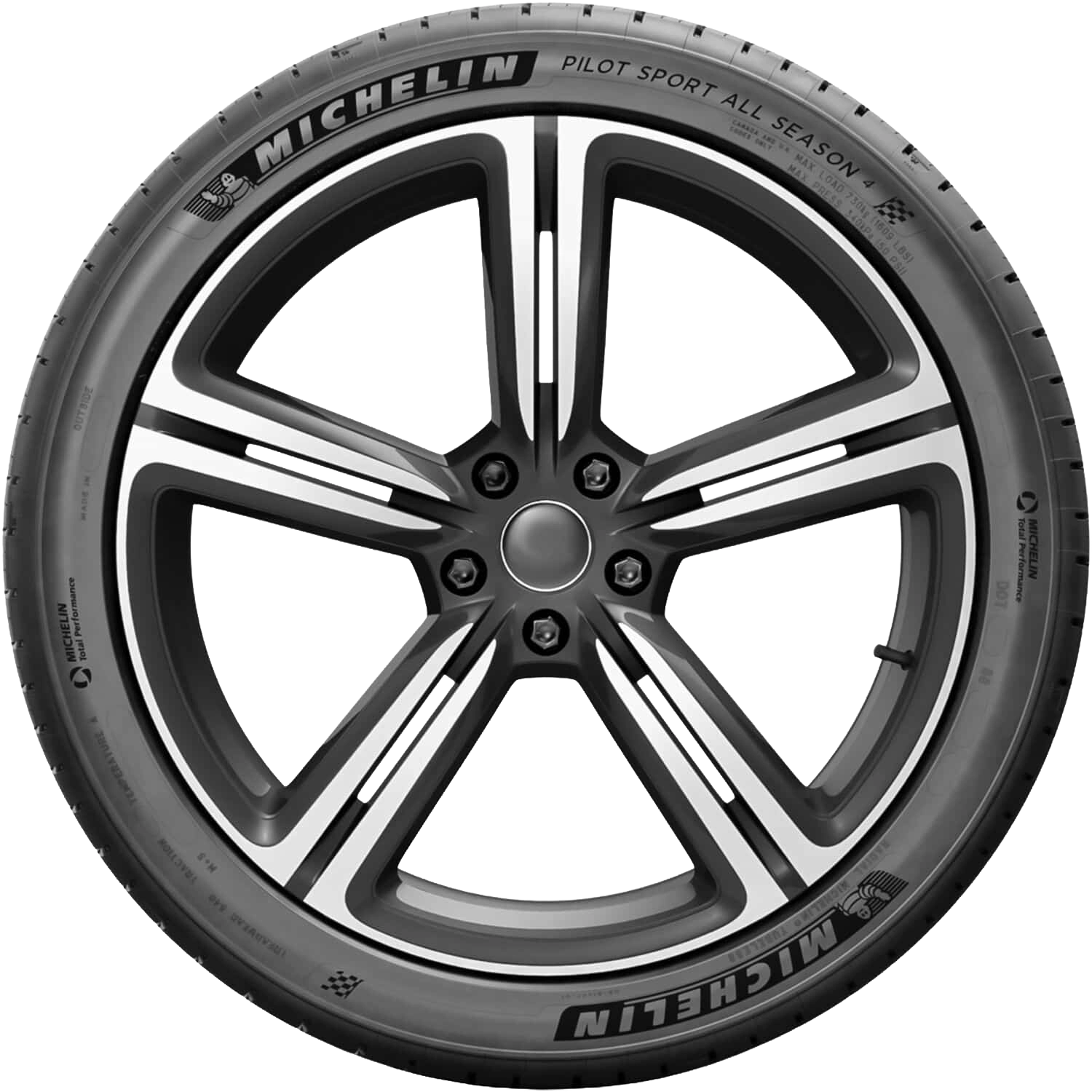
Section Width
This number represents the tire's width in millimeters, measured from sidewall to sidewall when the tire is properly mounted and inflated. A 225mm tire is approximately 8.9 inches wide. Wider tires generally provide more contact with the road for better grip and stability, but they may reduce fuel economy and can be more prone to hydroplaning in heavy rain.
Aspect Ratio
This is the tire's sidewall height expressed as a percentage of the section width. In this example, the sidewall is 45% of 225mm, which equals 101.3mm or about 4.0 inches tall. Lower aspect ratios (like 35 or 40) create shorter, stiffer sidewalls that improve handling precision and cornering response but provide a firmer, harsher ride. Higher aspect ratios (like 60 or 65) create taller sidewalls that absorb bumps better for a more comfortable ride but offer less responsive handling.
Radial Construction
The "R" indicates radial construction, where the tire's internal ply cords run radially from bead to bead. This is the standard construction for virtually all modern passenger and light truck tires. Radial tires offer better fuel economy, longer tread life, improved ride comfort, and superior heat dissipation compared to older bias-ply designs. You'll rarely see anything other than "R" on modern tires.
Rim Diameter
This number indicates the wheel diameter, in inches, for which the tire is designed. This tire mounts on a 17-inch wheel. It's critical to match this number exactly to your vehicle's wheels. Common passenger car sizes range from 15" to 20", while trucks and SUVs commonly use 17" to 22" wheels. Larger diameter wheels typically allow for bigger brakes but can reduce ride comfort.
Load Index
The load index is a numerical code that indicates the maximum weight each tire can safely support when properly inflated. A load index of 91 means each tire can carry up to 1,356 pounds (615 kg). For a standard four-wheel vehicle, this provides a total capacity of 5,424 pounds. Always ensure your tire's load index meets or exceeds your vehicle manufacturer's specifications, especially if you frequently carry heavy loads or tow trailers.
Speed Rating
The speed rating indicates the maximum sustained speed the tire can safely handle under optimal conditions with proper inflation and load. An "H" rating means this tire is certified for speeds up to 130 mph (210 km/h). The "Z" was originally the highest speed rating for tires capable of exceeding 149 mph. Modern tires now use W (168 mph) or Y (186 mph) for specific high-speed ratings (e.g., 245/40ZR18 97Y), but manufacturers often retain the "Z" in the size designation to indicate the tire's high-performance nature.
Understanding tire size helps you make informed decisions when replacing tires. You can choose tires with different characteristics (like a slightly wider tire for better grip or a higher aspect ratio for more comfort) as long as they're approved fitments for your vehicle. Always consult your vehicle's owner's manual or the tire placard on the driver's door jamb for approved tire sizes, and consider consulting a tire professional before making changes to your original equipment size.
Tap each segment to see its meaning.
x
37 - Overall Diameter
This number represents the tires' total height in inches when properly mounted and inflated, measured from the ground to the top of the tire. A 37-inch-tall tire is larger than standard passenger car tires and is common on lifted trucks and serious off-road vehicles. Larger-diameter tires provide increased ground clearance when navigating obstacles and improve approach and departure angles for trail driving.
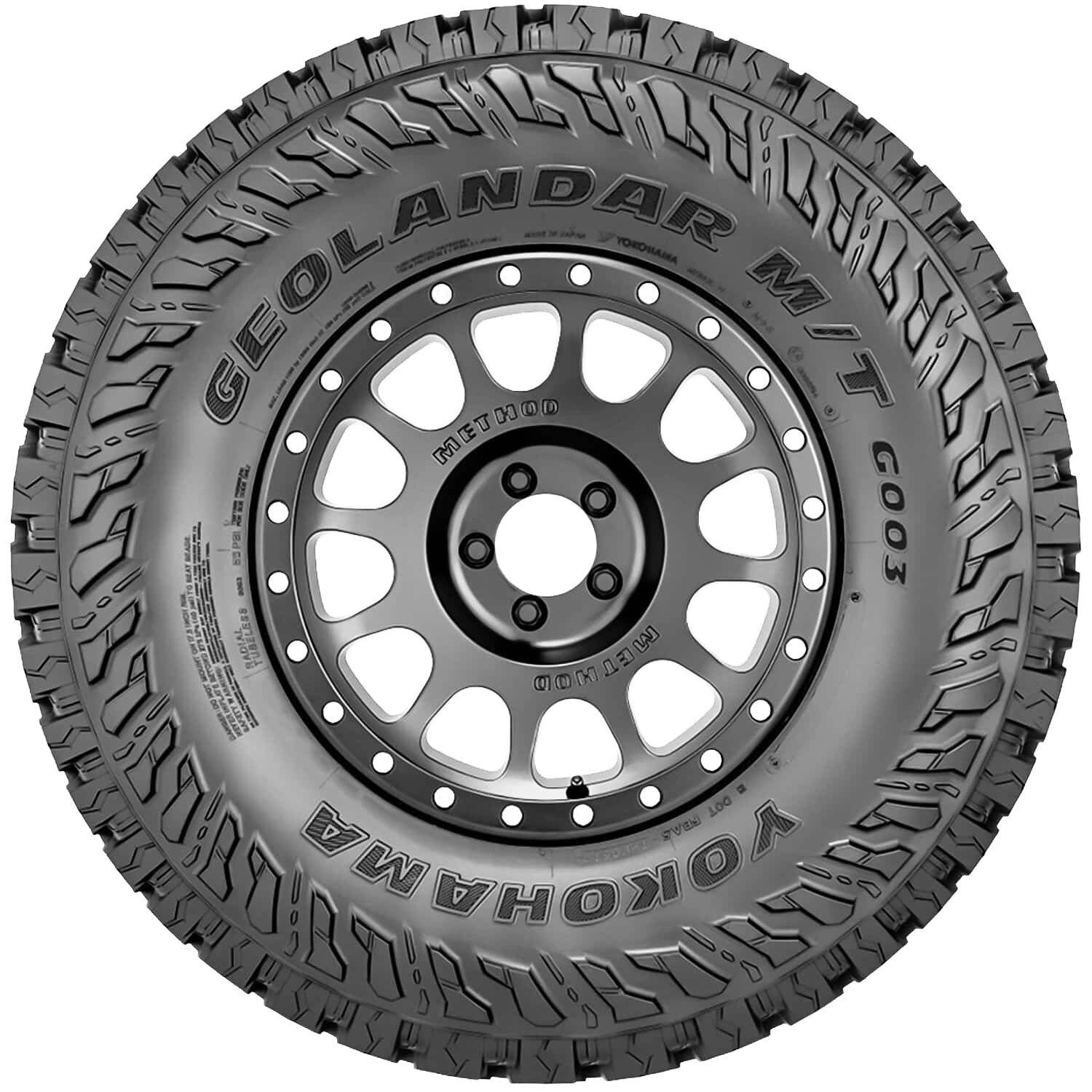
Overall Diameter
This number represents the tires' total height in inches when properly mounted and inflated, measured from the ground to the top of the tire. A 37-inch-tall tire is larger than standard passenger car tires and is common on lifted trucks and serious off-road vehicles. Larger-diameter tires provide increased ground clearance when navigating obstacles and improve approach and departure angles for trail driving.
Section Width
This measurement indicates the tire's width in inches from sidewall to sidewall when mounted and inflated. At 12.50 inches wide (approximately 318mm), this is a wide tire designed to provide a larger contact patch for better traction on off-road surfaces, like sand, mud, and loose terrain. A wider footprint prevents the tire from getting stuck, while also improving stability during off-road performance.
Radial Construction
The "R" indicates radial construction, where the tire's internal ply cords run radially from bead to bead. Radial construction offers better tread life, improved heat dissipation during highway driving, and more predictable handling characteristics compared to older bias-ply designs.
Rim Diameter
This number indicates the wheel diameter in inches that the tire is designed to fit. This tire mounts on an 18-inch wheel. Off-road enthusiasts often prefer wheel sizes between 17" and 20" since they provide a good balance between sidewall height and larger brake systems.
Load Range & Speed Rating
Unlike P-metric passenger tires, flotation-sized tires like this typically display their load range as a letter (such as Load Range E) and speed rating separately, often molded into other areas of the sidewall. Load Range E, common for 37-inch tires, indicates a 10-ply rating that can handle heavy trucks, added weight from modifications, and the stress of off-road driving. The speed rating for off-road tires is often Q (99 mph) or lower, since these tires prioritize off-road capability and durability over high-speed performance. Always check the complete sidewall markings for load and speed specifications.
Tap each segment to see its meaning.
-
7.00 - Section Width
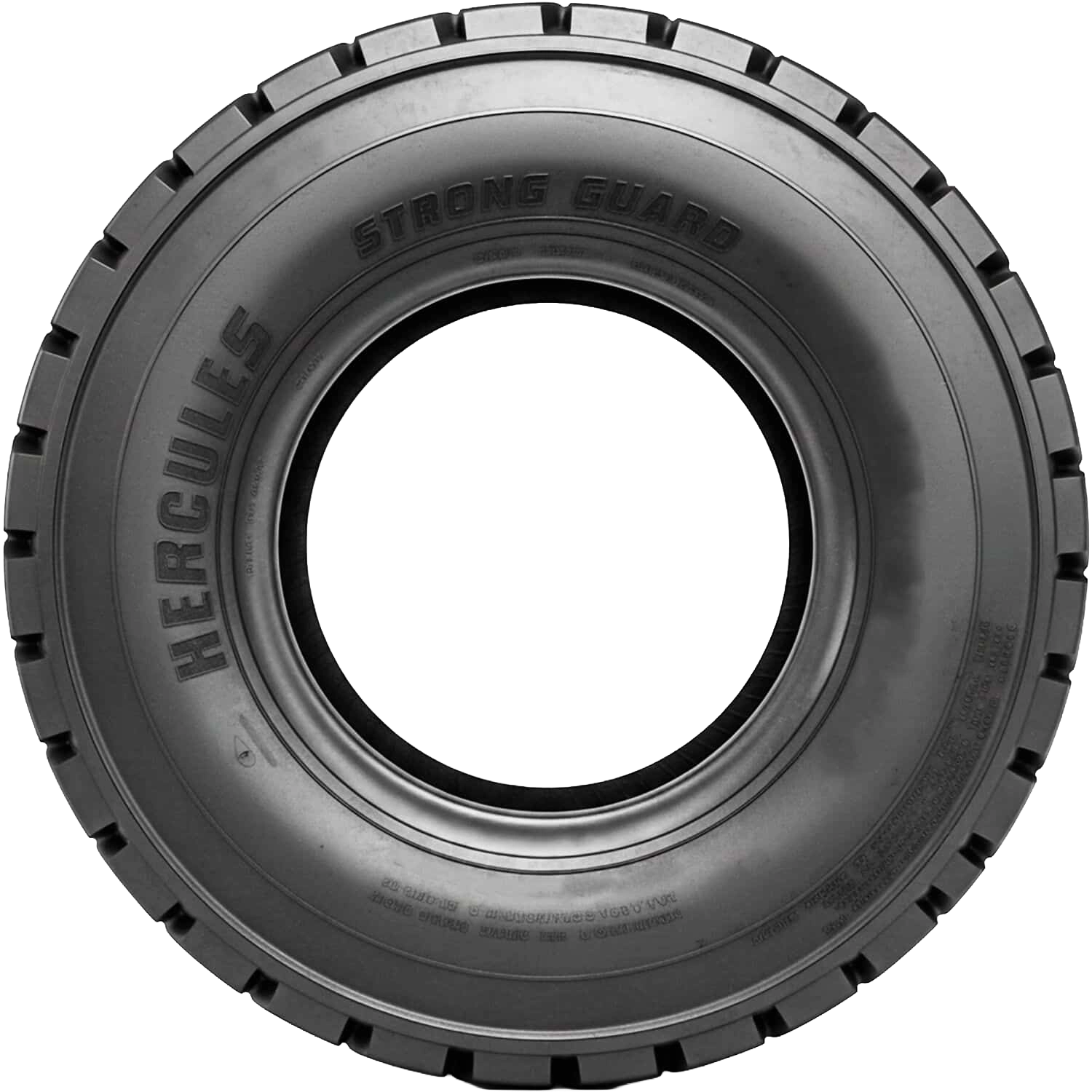
This number represents the tire's nominal width in inches from sidewall to sidewall when properly mounted and inflated. At 7.00 inches (approximately 178mm), this is a traditional sizing format for vintage vehicles and on agricultural equipment and trailers.
Section Width
This number represents the tire's nominal width in inches from sidewall to sidewall when properly mounted and inflated. At 7.00 inches (approximately 178mm), this is a traditional sizing format for vintage vehicles and on agricultural equipment and trailers.
Rim Diameter
This tire is designed for mounting on a 15-inch diameter wheel. The rim diameter must match the wheel exactly. For classic vehicle owners, maintaining original tire sizes preserves authentic appearance and period-correct handling characteristics.
Bias-Ply Construction
The dash between width and rim diameter indicates bias-ply construction, where internal cords run diagonally across the tire in crisscrossing layers. This construction offers extremely durable sidewalls with excellent load-carrying capacity, making it ideal for trailers and agricultural use.
Load Range & Ply Rating
Bias-ply tires display strength as a ply rating rather than a load index. Common markings include "4 PR" (4-ply rated), "6 PR" (6-ply rated), or "8 PR" (8-ply rated), with higher numbers indicating greater load capacity and durability. Trailer applications typically require 6- or 8-ply ratings to handle sustained loads and highway stress.
Speed Limitations
Bias-ply tires lack modern speed ratings and are not designed for sustained high speed driving. Most perform optimally at speeds below 65-75 mph, as the older construction generates excessive heat at highway speeds, accelerating wear and increasing the risk of failure.
Application & Considerations
Bias-ply sizing remains relevant for classic car restoration, vintage trucks, trailers, and agricultural equipment, where authentic appearance or specific load-bearing characteristics are required. For classic vehicles used regularly on modern roads, many owners convert to radial tires in equivalent sizes for improved safety and performance.

Overall Diameter for P-Metric Sizes
While flotation sizes directly indicate height, P-metric sizes do not. You have to calculate the overall diameter using the section width and the aspect ratio.
The formula is:
- Overall Diameter = (Width in mm x Aspect Ratio x 2) / 25.4 + Wheel Diameter in inches
Here's how it breaks down using P225/65R17 as an example:
- Convert width to inches: 225 mm / 25.4 = 8.86 inches
- Calculate sidewall height: 8.86 x 0.65 = 5.76 inches (one sidewall)
- Double it for both sidewalls: 5.76 x 2 = 11.52 inches
- Add wheel diameter: 11.52 + 17 = 28.52 inches total diameter
The overall diameter affects speedometer accuracy, ground clearance, and gear ratios. Installing tires with significantly different diameters throws off speedometer readings. Larger tires make it read slower than actual speed, while smaller tires make it read faster. A 3% change in diameter typically corresponds to a 3% error on a speedometer.
Diameter changes also affect vehicle performance. Larger tires reduce acceleration but can improve highway fuel economy. Smaller tires improve acceleration but can increase engine RPM at highway speeds. Most manufacturers recommend staying within 3% of the original tire diameter to avoid drivetrain stress and maintain proper vehicle operation.
Plus Sizing
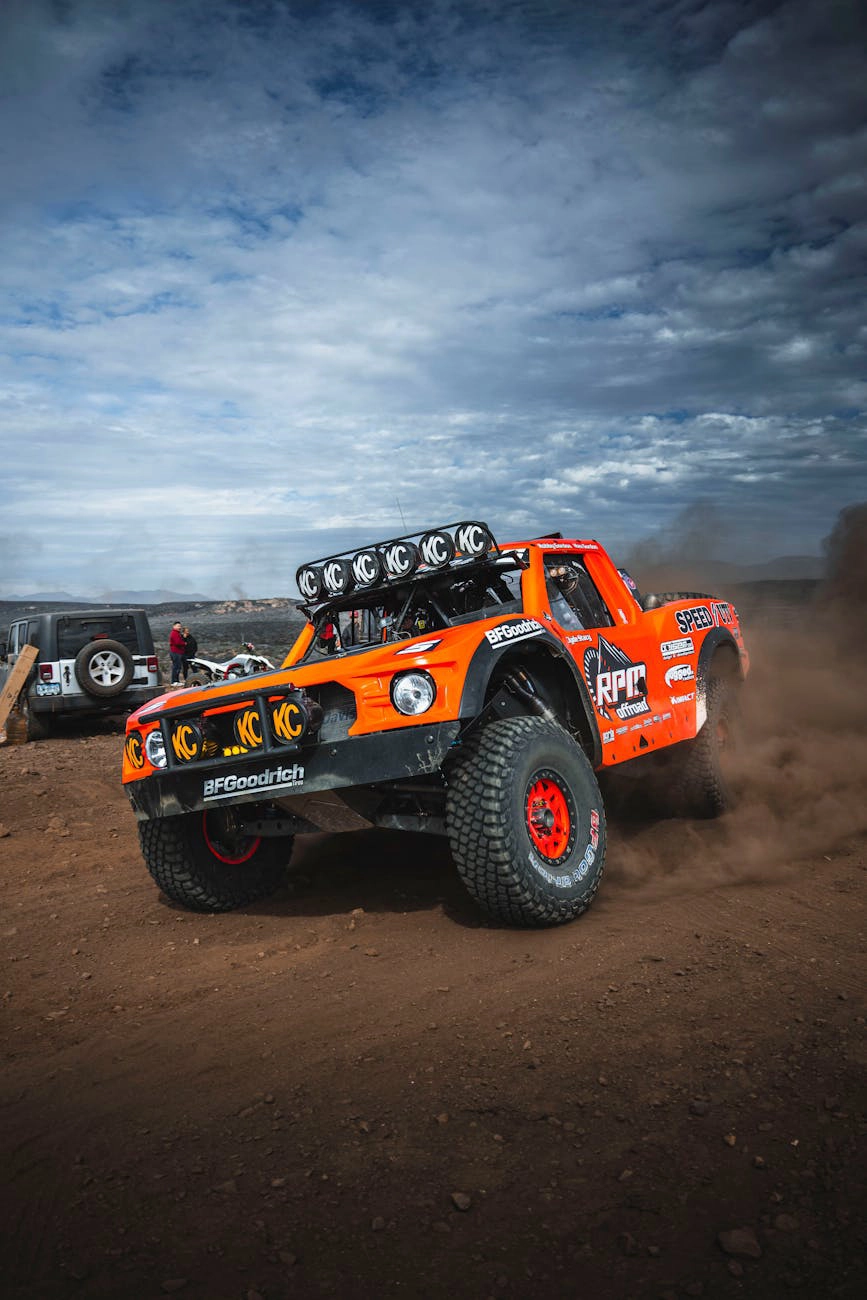
Plus sizing is the practice of installing larger diameter wheels on a vehicle while maintaining the same overall tire diameter. This is achieved by using tires with lower aspect ratios to compensate for the increased wheel size. The goal is to preserve speedometer accuracy, ground clearance, and proper vehicle operation while gaining visual and performance benefits of larger wheels.
How plus sizing works
Plus sizing follows the "+1," "+2," or "+3" system, indicating how many inches larger the new wheel diameter is compared to the original. For example, starting with a 225/65R17:
- Standard: 17-inch wheel with a 65 aspect ratio
- Plus One: 18-inch wheel with a 55 aspect ratio (225/55R18)
- Plus Two: 19-inch wheel with a 45 aspect ratio (225/45R19)
To maintain the same overall tire diameter, the sidewall height must decrease proportionally. If you increase wheel diameter by 1 inch, the combined sidewall height (top and bottom) must decrease by approximately 1 inch.
The lower aspect ratio reduces sidewall height to compensate for the larger wheel, keeping overall diameter within an acceptable range.
Benefits of Plus Sizing
- Better handling: A shorter sidewall (lower aspect ratio) is stiffer, which means less “roll” when you take corners at high speeds. This results in sharper, more responsive steering.
- Improved aesthetics: Larger wheels generally give a vehicle a more modern, aggressive, or sporty look by filling out the wheel well more with metal than rubber.
- Enhanced braking: Often, larger wheels allow for the installation of larger, high performance brake calipers and rotors.
Trade-Offs:
- Harsher ride: Since there is less rubber (sidewall) to act as a cushion, you will feel bumps, potholes, and road imperfections much more.
- Increased risk of damage: With a shorter sidewall, your rims are more susceptible to being bent or cracked if you hit a deep pothole or curb.
The 3% Rule
When plus sizing, the golden rule is to keep the new overall diameter within 3% of the original factory tire height. Anything beyond this can cause:
Speedometer errors: Your car will think it is going slower or faster than it actually is.
Tire rubbing: The tire may rub against the fender or suspension during sharp turns.
What Are Differences Between Tire Sizes

P-metric or Passenger Tires
Best for:
Cars, minivans, crossovers, and light-duty SUVs.
Construction:
Engineered for comfort and fuel efficiency with thinner, flexible sidewalls that absorb road imperfections and minimize rolling resistance.
Performance:
Delivers a smooth, quiet ride with excellent traction for everyday driving conditions.
Limitation:
Not suitable for heavy loads. Overloading P-metric tires can cause sidewall overheating and failure.

LT or Light Truck Tires
Best for:
¾-ton and 1-ton trucks, full-size vans, and vehicles that regularly tow heavy trailers.
Construction:
Features reinforced steel belts and thicker sidewalls, usually rated 6-ply to 10-ply, built to withstand extreme weight and off-road conditions.
Performance:
Significantly stiffer than P-metric tires, reducing sway during towing but delivering a harsher ride when unloaded.
Key difference:
Requires higher air pressure, usually 50 to 80 PSI, compared to 30 to 35 PSI for P-metric tires. Using incorrect pressure creates serious safety risks.

ST or Special Trailer Tires
Best for:
Boat trailers, campers, and utility trailers exclusively.
Construction:
Built with rigid sidewalls engineered to minimize trailer sway and support heavy, stationary loads.
Performance:
Optimized for following, not steering. These tires lack the tread design and flexibility required for vehicle control.
Warning:
Never mount ST tires on motorized vehicles. They cannot provide the necessary braking and cornering performance, leading to a dangerous loss of control.

C or Commercial Tires
Best for:
Heavy-duty delivery vans such as Ford Transit, Mercedes Sprinter, or Ram ProMaster.
Construction:
This is a hybrid design combining LT and passenger tire characteristics, specifically engineered for high-load commercial applications in urban settings.
Performance:
Built to endure constant stop-and-go driving and curb contact common in delivery work.
Identification:
The "C" designation appears at the end of the size marking (e.g., 235/65R16C), indicating reinforced construction for increased load capacity beyond that of standard passenger tires.
Where to Find the Correct Tire Size
1. Driver’s Side Door Jamb
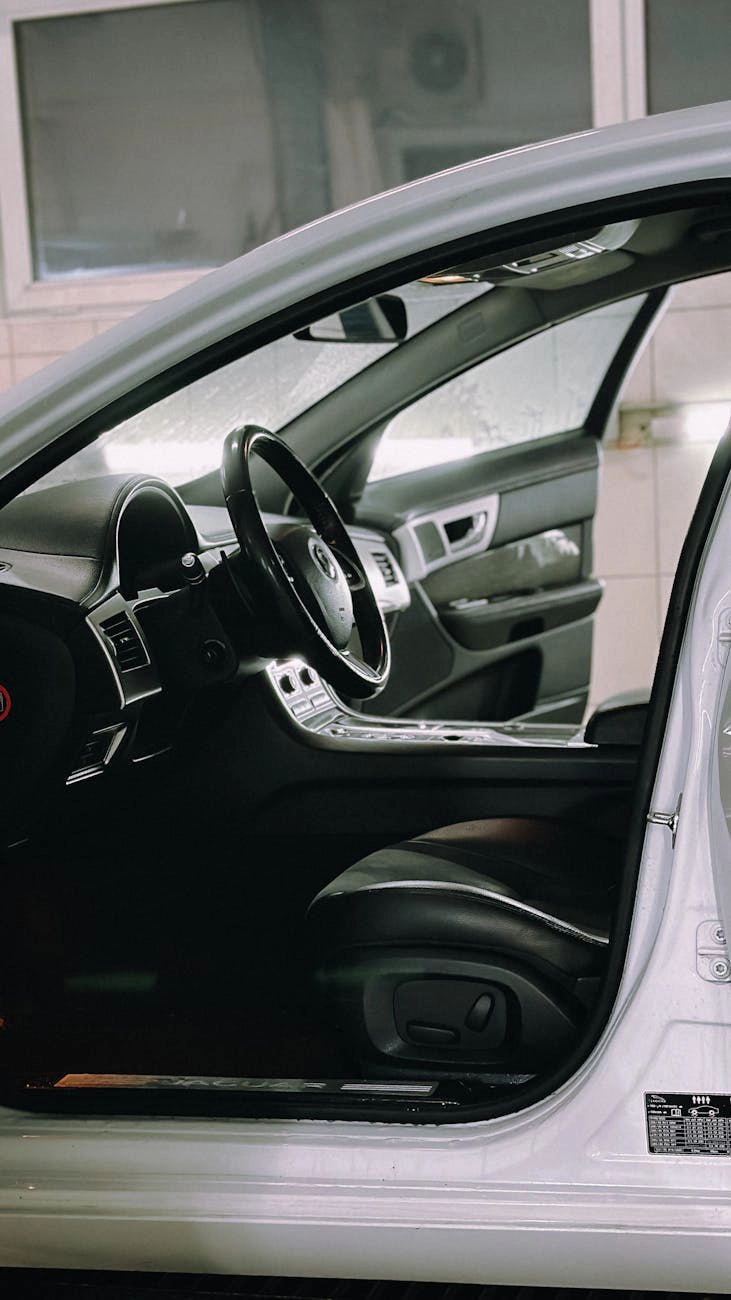
The most common location is a sticker on the driver’s-side doorjamb (the area visible when you open the driver’s door). This placard displays:
- Recommended tire size
- Proper inflation pressure for front and rear tires
- Vehicle load capacity information
2. Owner’s Manual
The owner’s manual confirms the approved tire sizes, tire pressure recommendations, and load-related guidance for the exact trim and wheel package on the vehicle.
- Recommended tire size
- Proper inflation pressure for front and rear tires
- Vehicle load capacity information
3. Other Locations
- Fuel door - displays tire size and pressure information on a sticker inside the fuel filler door.
- Glove compartment - certain manufacturers place tire information on a label inside the glove box.
- Current tire sidewall - the existing tire sidewall shows the installed tire size, but this might not match the manufacturer’s recommendation if the previous owner changed sizes.
US Tire Laws: The Essentials
Fender Coverage
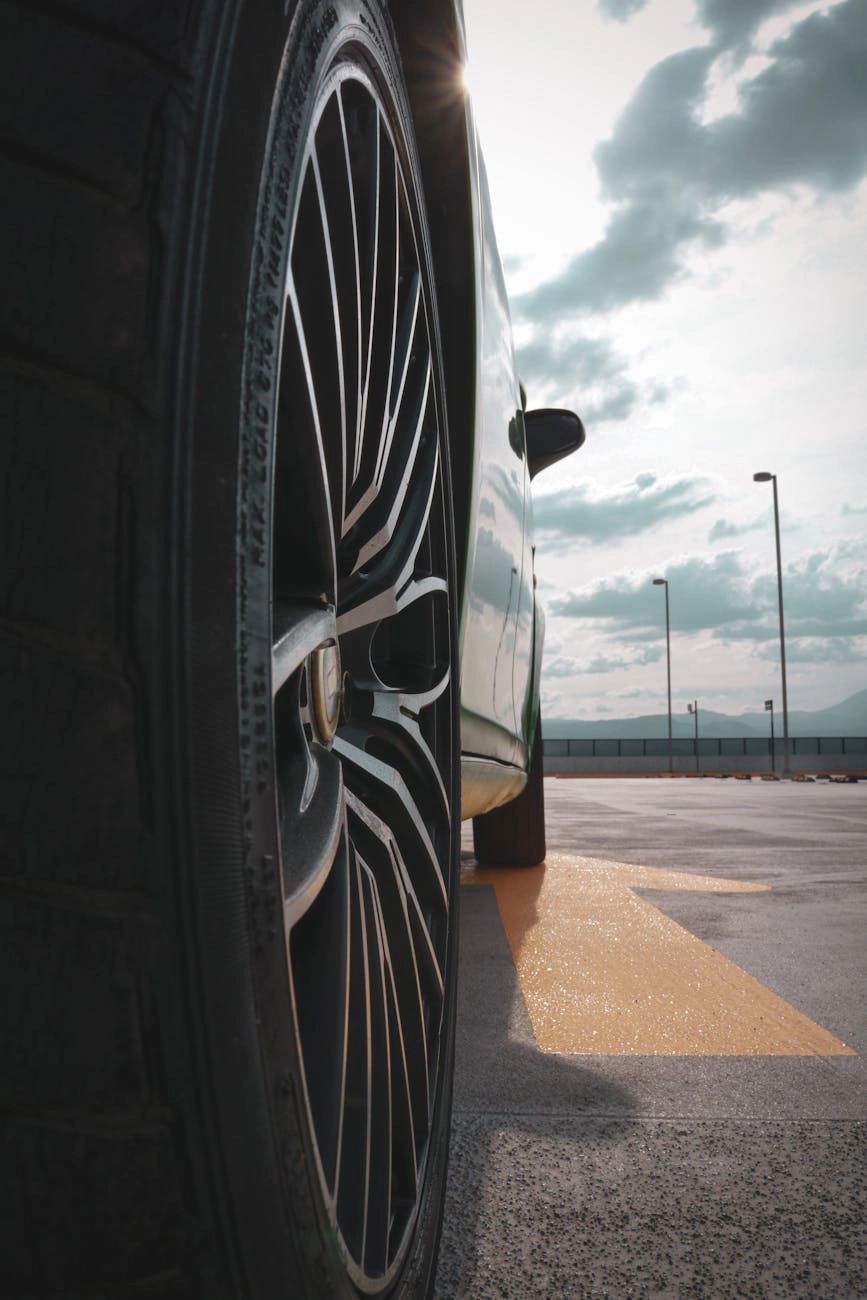
Tires cannot extend beyond the vehicle body. Wider tires require fender flares to cover any protrusion (not enforced in AR, MT, NM, ND, SC, WV). Ohio requires only half-tire coverage; Louisiana has no specific limit beyond overall width.
Width Limit
Federal law caps vehicle width at 102 inches (tire edge to tire edge). Exceeding this makes your vehicle illegal for standard road use.
Tread Depth
42 states require a minimum 2/32" tread depth. Commercial truck steering tires often require 4/32" for safety inspections.
Mud Flaps
Many states (AZ, TX, WA, OR, OK, UT, MN, and ND) require mud flaps on modified or lifted vehicles to prevent debris projection.
Frequently Asked Questions
How to read tire size?
- The Prefix: Look for the letter at the start (like P or LT), which tells you the vehicle class.
- The Dimensions: Read the three-part mathematical string separated by a slash and a letter (e.g., 225/65R17). This tells you the physical shape of the tire.
- The Service Description: Look at the separate code at the end (e.g., 102H). This tells you the tire's safety and performance limits.
How to find tire size?
How to check tire size?
How to measure tire size?
- Width: Measure from sidewall to sidewall at the widest point when the tire is properly inflated and mounted. Don’t measure just the tread surface. Instead, measure the full exterior width, including both sidewall bulges. Use a caliper or a straight edge for better accuracy.
- Diameter: Measure the overall diameter from the ground to the top of the tire while it’s mounted on the vehicle and properly inflated. This gives you the total height, which includes both the wheel diameter and twice the sidewall height.
- Wheel Size: Measure across the circular face of the rim from one inner bead seat lip to the opposite one. This is the diameter the tire is designed to fit, typically measured in inches. Remove the tire for the most accurate wheel measurement, or measure carefully at the bead area where the tire meets the rim.
What do tire size numbers mean?
- P - stands for "P-metric" or "Passenger Vehicle" tire and indicates the tire is designed primarily for cars, minivans, and crossovers.
- Note: You may also see LT (Light Truck) for heavy-duty towing/hauling, ST (Special Trailer), or T (Temporary Spare).
- 225 - represents the tire’s width in millimeters, measured from sidewall to sidewall.
- 65 - is the aspect ratio, meaning the sidewall height is 65% of the tire’s width.
- R - indicates radial construction, where internal cord layers run perpendicular to the direction of travel.
- 17 - specifies the wheel diameter in inches that the tire fits.
- 102 - is the load index, indicating the maximum weight each tire can carry at full inflation.
- H - represents the speed rating, showing the maximum sustained speed capability of the tire.
- Beyond size dimensions, every tire has a manufacturing date molded into the sidewall. Look for a character string that starts with "DOT" and locate the last four digits (e.g., 1224).
- The Information: The first two digits indicate the week of manufacture, while the last two represent the year.
- The Meaning: A code of 1224 means the tire was manufactured during the 12th week of 2024.
- The Safety Rule: Tires have a "shelf life" because rubber degrades over time. Most manufacturers recommend replacing tires every 6 to 10 years, even if the tread still looks deep.
How does tire size work?
- Width affects the contact patch size, influencing grip, handling, and the tire's interaction with the road surface.
- Aspect ratio determines sidewall height, which impacts ride comfort, steering response, and handling characteristics. Lower ratios create stiffer sidewalls for sharper handling.
- Diameter must match your wheel size exactly for proper mounting and fitment.
- Load index ensures the tire can safely support your vehicle’s weight, including cargo and passengers.
- Speed rating certifies the tire’s construction can handle sustained speeds at its rated capacity.
- These elements work together as a complete system. Changing any single element alters how the tire fits, performs, and interacts with vehicle systems like speedometers, ABS, and traction control. The size determines not just physical fit but also ride quality, handling balance, and safety margins.