Table of Contents:
Flat Spots on Tires: How to Spot, Prevent, and Fix Them
Tina Alijevic - May 27, 2026
Table of Contents:
How many times have you walked to your car and seen a weird spot on a tire, wondering what caused it? When you see a section of the tire that becomes worn or deformed, it is called a flat spot on a tire. Every driver should care about that because they cause noticeable vibrations, reduced handling, and longer braking distances.
If left unaddressed, flat spots can lead to serious safety issues; they can damage suspension components and increase the risk of blowouts, turning a minor issue into a serious road hazard. Let us introduce you to what flat spots on tires are, the different types of flat spots, and how to fix them.
Table of Contents
What Are Flat Spots on Tires
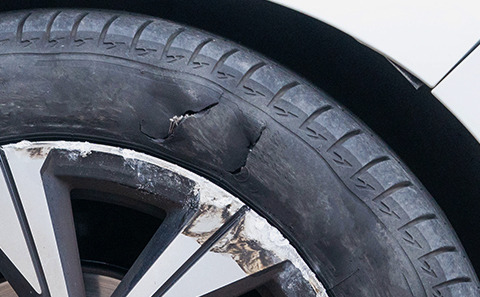
Flat spots on tires are areas where wear formation or deformation occurs on the tread pattern. These areas become compressed or graded into a noticeably flatter plane. The tire's flat spot can be caused by different forces and circumstances.
Some of the most common problems develop when the vehicle is parked for a long time. Prolonged pressure from the vehicle's weight on the tire can cause the rubber to harden at its contact area with the ground. On the other hand, sudden braking can also be a cause; it can lock up the tire, grind away the tread, and cause flat spotting over time. Improper inflation, misaligned wheels, aggressive driving, and even storage conditions can easily result in uneven tread wear or deformation of the rubber compound.
Temporary vs. Permanent Flat Spots
Not all flat spots are evolved by the same reason. Understanding the difference between temporary and permanent flat spots can help drivers respond appropriately to the problem and avoid unnecessary tire replacement.
Temporary flat spots can develop when a tire sits in the parking lot for an extended period. The tire under the vehicle's weight and cold conditions becomes less pliable. As a result, the tire stiffens and deforms in the area where it touches the ground. This tire deformation can cause a thumping noise and vibration while the tires are in motion. A temporary flat spot can easily be fixed by driving a few miles, the tire warms up, and the rubber can regain its flexibility.
On the other hand, permanent flat spots involve actual physical loss or structural change of the tire. Hard and sudden braking locks the wheel and skids the tire across the road, grinding the rubber against the tread pattern. This flat spot cannot be repaired or regenerated, so the vehicle needs a complete tire replacement.
There is also a case called a semi-permanent flat spot, which occurs when the vehicle has been stationary for an extended period in harsh conditions. In this case, the tire's rubber compound and chemical composition are starting to degrade, which cannot be fixed. All of these flat spots generate vibration and a thumping noise at highway speeds, and the issue may worsen or be fixed.

Why Flat Spots Matter
Flat spots on tires matter since they can cause significant ride disturbances and safety issues. The most recognizable symptom of a flat spot on a tire is vibration and a thumping noise. The flattened section strikes the pavement differently from the rest of the tread, sending a rhythmic pulse through the tire and into the vehicle's cabin.
The uneven contact patch produces a repetitive thumping or rumbling sound that cycles in time with the tire's rotation. At low speeds, this often sounds like a hollow thud, but at higher speeds, it can build into a persistent droning that fills the cabin and becomes difficult to ignore on longer drives. These symptoms together take a direct toll on driving comfort.
However, flat spot tires also contribute to uneven tire wear. Because the deformed section contacts the road with different pressure and geometry than the surrounding tread, it wears at a different rate. This irregular wear pattern shortens the tire's service life and can worsen the flat spot. In this case, a flat spot can lead to a serious safety issue during the drive.
What Causes Flat Spots on Tires
Several things can cause temporary and permanent flat spots on tires. Below you can find the most common cases, what to do if you have a flat spot on a tire, and how to fix it.
Long-Term Parking
The most common cause of a temporary flat spot on tires is long-term parking. This happens when the vehicle remains parked in the same place for a long period. The vehicle's weight is placed on the tire's contact area with the ground. Over time, that section of the tire begins to lose its shape and deform. The longer the vehicle sits stationary, the more defined this deformation becomes.
This kind of flat spot can be fixed by driving a few miles. As the tires warm up, they will gradually round out again. However, in some cases, when the vehicle has been parked for several months with extreme temperature changes, this deformation can become permanent. To prevent this flat spot from occurring on your tire, move your vehicle periodically to redistribute the vehicle's weight placed on the tire and to enable the tire to maintain its optimal shape.
Hard Braking or Skidding
Sudden braking locks up the wheels, which forces the tire to stop rotating while the vehicle is still moving forward. Instead of rolling, the tire is skidding across the road surface, which creates friction concentrated in one single spot. This grinds down the tread in that spot far more rapidly than normal driving would.
The flat spot developed by braking directly wore out the tire's surface, leaving a visible bald patch or scuff mark. This type of damage is sudden and localized on a single spot that weakens the tire's structure. The deformation leads to vibrations, reduced handling, and, in some cases, blowouts. Modern vehicles have ABS systems, designed to prevent wheel lockup during hard braking, reducing the risk of uneven tread wear.
Low Tire Pressure
Underinflated tires cannot maintain the ideal tire shape under the weight of the vehicle. It forces the tire to compress and bulge more than it should at the contact point with the road. As a result, excessive stress is placed on the sidewall and the edge of the tread. Tires with a lack of air pressure are softer than intended; they deform more with every rotation, which develops flat spots and an uneven wear pattern over time.
Driving with underinflated tires can accelerate to lasting damage to the internal structure. Over time, it can lead to premature tread wear on the outer edge of the tire, reduce fuel efficiency, and increase the risk of blowouts. Regularly checking your tire pressure can prevent flat spots from forming.
Cold Temperatures
Cold temperatures stiffen the tire's rubber compound, which reduces flexibility. When rubber loses its flexibility in cold conditions, the tire is not able to bounce back to its original round shape after being compressed under the vehicle's weight. In other words, flat spots developed from long-term parking or hard braking become more pronounced in cold weather because the stiff rubber holds its deformation.
When the vehicle sits overnight in freezing temperatures, the driver may feel a vibration during the first few miles until the tires warm up and the rubber regains its ideal shape and flexibility. Repeated exposure to cold temperatures combined with prolonged parking can gradually make flat spots more permanent.
Heavy Vehicle Load
The vehicle's weight pressure directly affects the tire's contact patch. At the point where the tire meets the road, a flat spot can form. When the vehicle is loaded beyond its normal weight with extra passengers, cargo, or other equipment, that added weight is distributed through the suspension and onto the tires. It causes each tire to compress more firmly against the road surface, which increases the stress on the tire's tread.
When the heavily loaded vehicle remains parked for an extended period, it increases the pressure placed on the tire and starts developing flat spots. The extra weight presses the tire into the ground, accelerating the deformation of the contact patch and making it more difficult to spring back to its normal shape. By staying within the vehicle's recommended load capacity, the tire's service life can be extended, and safety ensured.
What Do Flat Spots on Tires Feel Like
Flat spots on tires can make different sounds and vibrations during performance. Drivers often notice a louder noise and vibration at the start of driving, which may lessen as the tire warms up. Recognizing these symptoms is a warning sign that can help prevent further tire damage and keep the vehicle safe throughout the drive.
Common symptoms that may indicate a flat spot on tires:
- Steering wheel vibration: This is one of the most noticeable signs felt during steering, especially at certain speeds. The tire's flattened section creates an imbalance with every cornering, sending rhythmic pulses up through the steering wheel that the driver can feel in their hands.
- Thumping or bumping sensation: Drivers may feel a repetitive thumping or bumping coming through the seats or the floorboard as the flat spot makes contact with the road with each revolution of the tire.
- Rough ride quality: Rather than rolling smoothly, a tire with a flat spot can cause the vehicle to feel unsettled. The ride may feel harsher than usual, making the overall driving experience uncomfortable.
- Noise while driving: Flat spots produce thumping and rumbling sounds that change with vehicle speed. This noise often comes across as an uneven sound that is difficult to ignore and tends to be more pronounced on smooth road surfaces.
Are Flat Spots on Tires Dangerous?
Flat spots on tires can be dangerous depending on the type, cause, and severity. It can compromise the vehicle's stability, steering responsiveness, and braking distance.
A temporary flat spot is a comfort issue because it makes a subtle thumping noise and vibration felt in the vehicle's cabin. This flat spot will disappear after a few miles, when the rubber heats up from friction. As a result, the tire regains its flexibility, and the driving comfort will improve.
However, a permanent flat spot on tires is an irreversible issue that becomes a safety concern. They are accelerated by external factors, which compromise the integrity of the tread pattern and rubber. It can lead to heavy vibration and thumping during the drive, and it will not go away after a few miles. A permanent flat spot is dangerous because it can compromise the vehicle's stability during braking and cornering, damage wheel bearings and suspension components, and even pose a risk of blowouts. In this case, it is recommended to change the tire completely.

How Long Does It Take to Get Flat Spots on Tires
The time it takes for flat spots to develop on tires greatly varies depending on the type of flat spot. Permanent flat spots compress the contact patch, and their formation depends on the driver's driving habits and aggressive braking. Nonetheless, several factors influence many flat spots.
- Tires can easily develop temporary flat spotting from 1 to 30 days. If your tires sit for more than a month or longer, there is a risk of developing a temporary, semi-permanent, or permanent flat spot.
- Underinflated tires also have less air volume and support to bear the vehicle's weight. Reduced PSI increases the tire's contact patch, which can speed up the flat spotting process.
- Cold temperature can cause a stiffer rubber compound, which can accelerate the flat spotting process. In cold weather conditions, the tire air pressure can drop by 1 PSI for every 10 degrees, and this air pressure loss can also cause tire deformation.
- A heavier weight utilizes more forces on the tire's contact patch. When the weight on the vehicle is heavier, the tire's structure flattens faster and becomes more rigid.
- The tire conditions can also lead to flat spots. Low-profile tires with a softer rubber compound and older, less elastic tires are more susceptible to semi-permanent flat spotting.
Factors That Speed Up Flat Spotting
As we already know, flat spotting on the tire can occur when a vehicle rests in one spot for too long, but this tire deformation can be accelerated or worsened by certain factors. One of the very common factors that speed up flat spotting on tires is low tire pressure. Underinflated tires place more stress on the rubber, making flat spots more likely to form. Maintaining optimal tire pressure helps prevent this.
However, a heavy load can also worsen flat spotting, as storing a loaded vehicle places more weight on the tire's contact patch. Using specialized support can help to distribute the vehicle's weight and maintain the tire's round shape. As the rubber compound ages, old tires lose their flexibility and are more prone to permanent flat spotting. Poor storage conditions significantly increase the chance of flat spotting on tires. Exposing tires to extreme temperature swings accelerates the formation of flat spots. Moisture and temperature differentials between the floor and the rubber degrade the tire. Make sure to store your tire properly in a clean and dry, cool, dark indoor location.
How to Prevent Flat Spots on Tires
Preventing flat spots on tires requires basic and consistent maintenance. Make sure to regularly monitor your tire inflation levels, drive regularly, and avoid aggressive driving habits.
Some of the best everyday prevention tips include:
- Maintain proper tire pressure by checking your PSI at least once a month. Follow the exact manufacturer-recommended PSI, which is placed on the sticker inside the driver's side door jamb.
- Drive the vehicle regularly. If your car is parked for a long tire, take it for a short drive to warm the tire and redistribute the weight of the vehicle placed on the tire.
- Avoid sudden braking by leaving enough space between the vehicles to ensure a longer stopping distance to allow gradual, smooth deceleration.
- Keep tires in good condition by regularly checking for uneven wear or bulges, scheduling regular tire rotation and wheel alignment.
Frequently Asked Questions
How To Fix Flat Spots On Tires?
If flat spots on your tires are caused by a vehicle sitting for a long time, just inflate them to the maximum recommended pressure. But if your flat spot was caused by slamming on the brakes and skidding, these tires cannot be fixed, and the tire must be replaced.
Can You Drive On Tires With Flat Spots?
It depends on the type of flat spots. Temporary flat spots can be used because they usually resolve after a few miles of driving, whereas permanent flat spots from skidding or prolonged storage are unsafe and require replacement.
How Much Does It Cost To Fix A Flat Spot?
Fixing a flat spot on a tire can range from $0 to $650+. It depends on whether the damage is temporary or permanent. Permanent flat spots require tire replacement, typically costing $100-$650+ per tire.
Related Posts