Table of Contents:
11 Effective Ways to Make Your Car More Eco-Friendly
Agota Szabo - January 28, 2022
Table of Contents:
While green cars are still a long way from becoming mainstream, there are still a couple of things we can do to make our cars more eco-friendly.
Yet, we do not need our own electric cars or hybrid vehicle to do what we can to decrease our carbon footprint. There are certain ways we can make our vehicles more fuel-efficient even without fancy gadgets.
Check out this list we have combined to see what you can do to ensure your vehicle's fuel-conscious performance.
Table of Contents
Fuel Efficiency and Gas Mileage
Fuel usage is dependent on the tires' rolling resistance. This is the pressure that affects the tires during their performance, determining the vehicle's needed energy output to keep the tires in motion.
In other words, the higher the rolling resistance, the higher the fuel consumption is.
If we manage to decrease this pressure, we effectively lower the vehicle's fuel intake and CO2 emission levels. When this happens, we offer an environmentally conscious drive. However, the reverse is also true.
How to Improve Fuel Economy?
Fuel efficiency varies from vehicle to vehicle. However, with the use of modern technologies manufacturers have managed to make fewer cars without a low carbon footprint.
Yet, we as drivers can still do a few things to further decrease the fuel intake levels consumed by our vehicles. Let's take a look at what these things are:
Inspect Tire Pressure Regularly
Tire pressure is key to EVERYTHING!
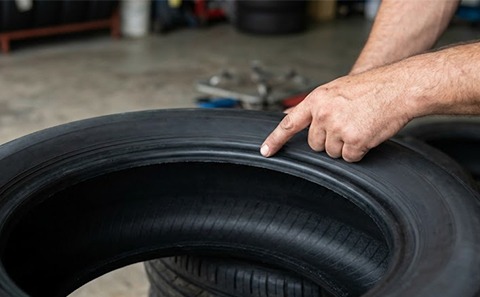
You can find the correct tire pressure your vehicle needs to run at in the owner's manual or on the driver's door. However, it is also highlighted on the tires' sidewall.
To make your car run as it should, the tires need to be properly inflated. By having them at the correct pressure, they will be able to optimize the pressure circulation. This increases traction and lowers the rolling resistance - which regulates the vehicle's energy usage.
Over or under-inflated tires will place unnecessary pressure on the vehicle's forward motion. To make your car more eco-friendly, check regularly if the tires are properly inflated or not.
Turn off the Air Conditioning
In order to make your car more eco-friendly, turn off the air conditioning.
It might be tempting to turn on the air conditioning in hot summers, but, unfortunately, it places strain on the vehicle. To be more precise, it makes the car's electrical system and engine work harder, which results in more fuel intake.
The A/C increases the fuel consumption, there is no question about it. However, if you cannot stand the heat just make sure the system is running as it should. A faulty A/C causes even more problems as the vehicle will have to compensate for its lacking efficiency. Have the system pressure and refrigerants at the needed levels.
Furthermore, don't be afraid to roll down your windows. While it can cause problems at highway speeds, it will not ruin the vehicle's fuel economy during its everyday use.
No Need for Extra Fuel
Energy-efficient vehicles feature emission canisters near their gas tank. This prevents harmful vapors escaping into the atmosphere. However, its effectiveness depends on the gas tank not being overflown.
In other words, topping off the tank is not a good idea. It forces liquid fuel into the emission canister, diminishing its usefulness. Overflowing the gas tank can lead to the complete failure of these canisters as well.
So, the next time you stop at a gas station, think about how you can reduce vapor emissions simply by leaving a little bit of space in the fuel tank.
Get the Fuel System Checked
The fuel system consists of fuel filters, fuel injectors, fuel pumps, and fuel lines. If any of these parts is faulty, the car's fuel consumption will increase.
For this reason, the fuel filter needs to be switched and the fuel injectors have to be cleaned after about 20-30,000 miles - depending on the vehicle. This should be part of the vehicle's regular maintenance.
Still, if you notice anything out of the ordinary - the smell of fuel in or around your car - get the fuel system checked immediately. You might be losing fuel due to a faulty part.
Routine Maintenance
Regular tune-ups will save you from a lot of headaches. A well-maintained car and good driving habits are the keys to many things, including better fuel efficiency.
Oil changes are a must. They need to be completed every 5,000 miles to minimize the vehicle's greenhouse emissions. Yes, even oil loses its functionality with time. So, if you wish for the engine parts to run smoothly, a visit to your mechanic should be scheduled.
Apart from this, the oxygen or air filters need to be looked at whenever the vehicle is getting a tune-up. These are important for the car's functionality, as well as its fuel economy.
Additionally, while we are at it, get the spark plugs checked too. They are responsible for creating the power the engine needs, but they can get dirty or break. If this happens, fuel will not burn correctly, which increases fuel consumption greatly. Spark plugs should be looked at after every 30,000 miles.
The car's electrical system should be checked too. If any signal lights turn on, consult with the owner's manual and your mechanic. That is the best way to keep your car functioning in a fuel-efficient manner.
All in all, ask a mechanic you trust for a recommended maintenance schedule and have your car tuned regularly.
Drive at Optimal Speed
The fuel economy will be ruined by reckless driving habits. Not only does it boost up the car's gas mileage, but it will also double its pollution levels. Quick acceleration and aggressive maneuvering increase the car's carbon footprint.
Therefore, to ensure an eco-friendly performance, keep to the speed limit. In clear weather conditions, the vehicle's cruise control will be your friend. The cruise control keeps the car at a steady speed, as it prevents the vehicle's speed from accelerating over a certain speed limit.
Ease your foot off the gas pedal and ensure you are driving safely at highway speeds in various weather conditions. This guarantees a fuel-efficient performance.
Excess Weight is Pointless
The more pressure (load or driving) is placed on the four tires, the more fuel the vehicle will need to keep the engine running. For this reason, it is important to get the correct tire set for your vehicle. If you are in the market for a new tire set, check out available options at Priority Tire.
Now, let's talk about weight and how much your car weighs!
While reducing the weight of your car is not possible, you can still make sure to only keep essential items in your vehicle. Remove the roof rack when it is not in use, take out unnecessary boxes and cargo from the trunks, leave the child seat at home when you don't need it. Small things add up and will help your car to use up less fuel in the long run.
In order to ensure your car's maximum efficiency, clean out unessential items!
Check the Emissions System
The emissions system is responsible for cleaning and significantly decreasing the exhaust fumes let out by the vehicle. Basically, it is a complicated system which deals with reducing the pollution of the vehicle.
If a problem arises with the emissions system, your car will let you know. The onboard computer control system will make sure the "check engine" shines brightly until you get the issue fixed. The sooner the problem is taken care of the better.
The Radiator is Important
The vehicle's radiator and cooling system regulate the engine's output. Problems arise when the radiator's thermostat is faulty.
If it's cold running it diminishes the vehicle's fuel economy, requiring it to use up more gas. On the other hand, it running hot is also a huge problem, as the engine can overheat and blow the radiator.
So, if you notice any issue with the temperature gauge on your dashboard, schedule an appointment with your mechanic. Not only does this issue cause the car to emit more carbon dioxide and toxic fumes, but it can potentially lead to dangerous car trouble.
Don't Idle
Do not keep your car running. If you need to wait for someone or are stuck in traffic congestion it is best to turn off your vehicle. This will make the car use less gas, also minimizing its CO2 emissions carbon emissions in the process.
Most modern cars are manufactured with an Idling Stop system. This system automatically turns off the engine when the vehicle is stopped, which improves its fuel economy. While it might be an annoying feature to those who are not used to it, it makes the car more eco-conscious in the long run.
Use the Car Wash
Washing your car at home might seem like a good idea, but there is a problem. Not only are you using more water to clean the vehicle's exterior, that water - along with exhaust residue, oils, and gasoline - eventually makes its way back into the ecosystem. Unfortunately, it goes without saying that this is not good for the environment.
Therefore, using commercial car washes is a better option. By law, they are required to drain their water into the sewage system, where it gets filtered and treated before being let back into waterways. This significantly lowers water waste and prevents harmful substances from draining into the ground.
Furthermore, most commercial car washes utilize modern technologies to additionally lower their pollution. These include computer-generated systems and high-pressure nozzles that optimize their water usage.
Additionally, if you really do not wish to go to such a car wash, you can opt for a waterless car wash. These are products you can purchase online to wash your vehicle with. They do not require water as they use high lubricity chemicals to clean and shine the car's exterior.
Frequently Asked Questions
Can I Wash My Car with Just Water?
While you can wash your car with just water, it is not very effective. Water will only remove dust, and rubbing the surface to dislodge mud and dirt can actually scratch the paint. Therefore, if you do not have car soap handy, it would be better to use dish soap instead of cleaning the car with just water.
What Are the Eco-Friendly Features to Look for in a Car?
There are a few features you should for in an eco-friendly car that reflects their performance. These features are lower vehicle weight, its emission system and sensors, LED lights, their hybrid engines, radar alerts, their air filtration systems, and inflatable rear safety belts to name a few.
Related Posts
What Is a Tire Iron: Must-Know Facts Before Your Next Flat Tire
Tina Alijevic - June 10, 2026